Mandala Art and the home of Mandala Meditation
Mandala Art and the home of Mandala Meditation
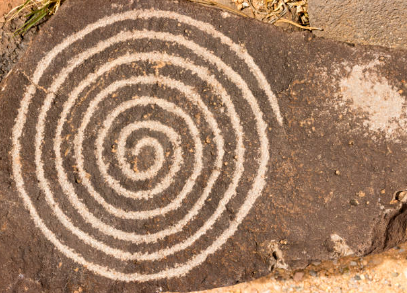
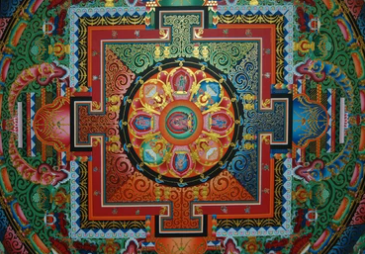
A little background on the history and evolution of mandalas. Since humans could wield tools we've expressed ourselves in images and pictograms, with the earliest spirals being seen in cave drawings dating back to the ice age. More intricate patterns know as mandalas date to ancient India as far back as the 1st century appearing in Hindu and Buddhist traditions it is believe that they represented the universe, balance and spiritual guidance. The word itself 'mandala' means circle in Sanskrit, as each design will begin with a single central point to grow outwards from.
As Buddhism spread along the silk road, mandalas where introduced to places like Tibet, china and Japan between the 4th and 5th century BC where they developed their own styles and traditions. Through growing trade mandalas spread yet further into the world appearing in everything from architecture to decorative homeware for the wealthy. The earliest examples appearing in islamic culture where found in the great mosque of Kairouan in Tunisia, dating 836 AD and have grown more elaborate and impressive ever since.
Throughout time mandalas have been used as a means of meditation and ritual, it is acknowledged that by focusing on it's creation and growth one can achieve spiritual enlightenment and a sense of inner peace...
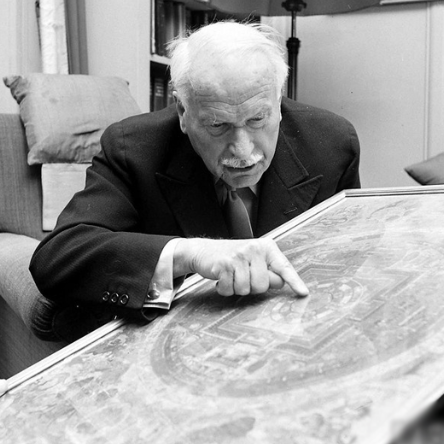
... Something recognised in the western world in the early 20th century by Swiss psychiatrist and psychologist Carl Jung, who would ask his patients to draw mandalas so that he could better understand their unconscious mind and he could facilitate an understanding of inner self and restore order.
In modern settings mandalas still hold a calming and balancing influence over their observer, being used widely in the wellness industry to promote a sense of growth and inner peace. And there are many crossovers and ways that a mandalas physical manifestation can inform a healing process
We need your consent to load the translations
We use a third-party service to translate the website content that may collect data about your activity. Please review the details in the privacy policy and accept the service to view the translations.